"Learning is not attained by chance, it must be sought for with ardor and attended to with diligence”
(Building as Learning Aid) is an innovative concept towards qualitative improvement in education,
through developing child-friendly, learning and fun based physical environment building in
school infrastructure
BaLA Creates an absolute learning environment that is creative, joyful and innovative.
Building as Learning Aid, or BaLA as it is popularly known, is about developing school spaces —
the classrooms, the floors, walls, doors, windows, pillars, corridors, the outdoor spaces and the
natural environment — as learning resources. “BaLA is a holistic plan and the school
infrastructure is used to educate students in the new concept. It incorporates the ideas of
activity-based learning The Building elements of normal concrete shapes are modified innovatively
to involve children creatively.
The major objectives of Bala project are:
In JMV, we have been utilizing school’s physical infrastructure as a learning aid. It
gives a multisensory experience to the children and makes abstract concept more concrete and real
from the child’s perspective.
Our schools infrastructure is adorned with the stories of human evolution, National Freedom
Struggle etc.
Walls are decorated with the boards depicting 23 JAIN Tirthankars, Mathematics Formulae, Sanskrit
Shlokas, Phonetics, important agencies and their symbols, tables, hindi alphabets, inspirational
quotes, effective habits and washroom ettiquettes.
The concept of BaLA creates a dedicated space for conducive learning as well as it
incorporates the ideas of activity based learning and makes the learning environment absolutely
hilarious, joyful, creative and innovative.
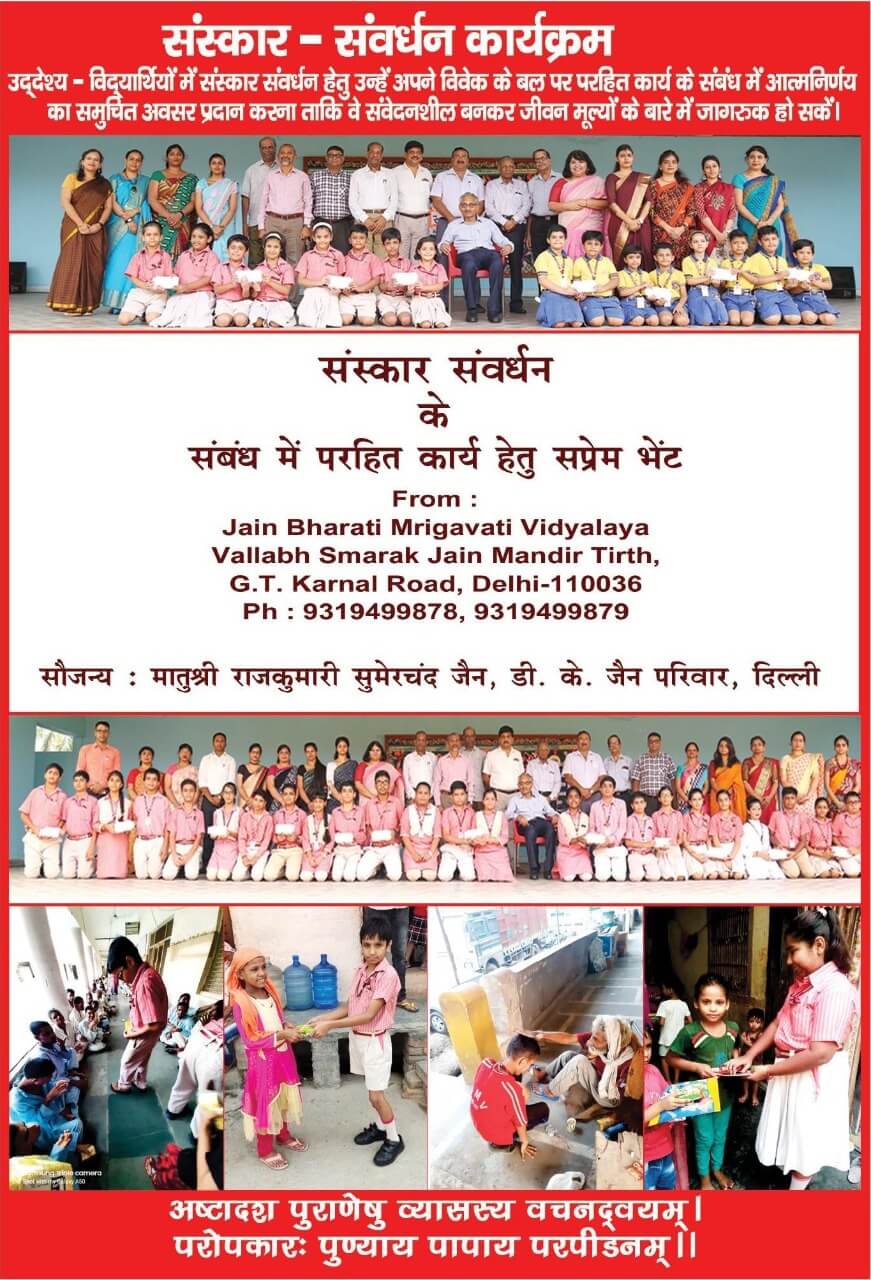
We lay great emphasis on Sanskar Samvardhan and organize programmes regularly to endow the progeny with virtues like love, peace, non-violence, compassion, sensitivity, empathy etc. We continuously endeavour to make students cognizant about the principles of giving and serving humanity.We instill humanistic values among the students and help them develop altruistic attitude in life. In this context, each student is given a sum of Rs 50/- and is asked to spend the amount for the charitable purpose. They are also asked to share their experience of utilizing the amount that they had spent for the benefit of the underprivileged. It would provide them a chance to take right decision based on their judgment and conscience. It would also motivate them to practice philanthropy in their lives and to contribute for the worthwhile purposes.
LIFE SKILLS AND VALUES EDUCATION
In JMV, we teach our students the art of living well through life skills education and values education which is inherent in our civilization, culture and tradition spanning over centuries.
AWAKENED CITIZEN PROGRAMME
It is a unique values education programme for classes VI-IX, It empowers children with a strong foundation of values. They get awakened to their infinite potential, intrinsic oneness and equality among human beings.
CHARAN SPARSH
JMV in collaboration with JITO, organized a programme based on family values titled `Charan Sparsh’ conducted by the widely acclaimed motivational and inspirational speaker Mr. Rahul Kapoor Jain. “In the present era of technology when ‘Sanskars’ are taking backseat the resource person scientifically reinforced us to embrace our old customs and values.”
KSHAMAPNA DIWAS
Forgiveness is the first and foremost virtue of ascetics and scholars. It is the ornament of the brave. Every year Vidyalaya celebrates Kshamapana Diwas to expound the significance of forgiveness in life. Principal, teachers and students give and seek forgiveness to each other.
JAGRITI SHIVIR
Jagriti Shivir was organised with an aim to spread positivity and enable every child to contribute. Shloka chanting, discussions and PPTs were shown to elucidate the topics.
PURPOSE STATEMENT
All the departments have their specific purpose statements. At regular intervals, the statements are reviewed and discussed, how to remain relevant and achieve our goals through new pedagogies and innovative practices.
Class 6
Class 7
Class 8
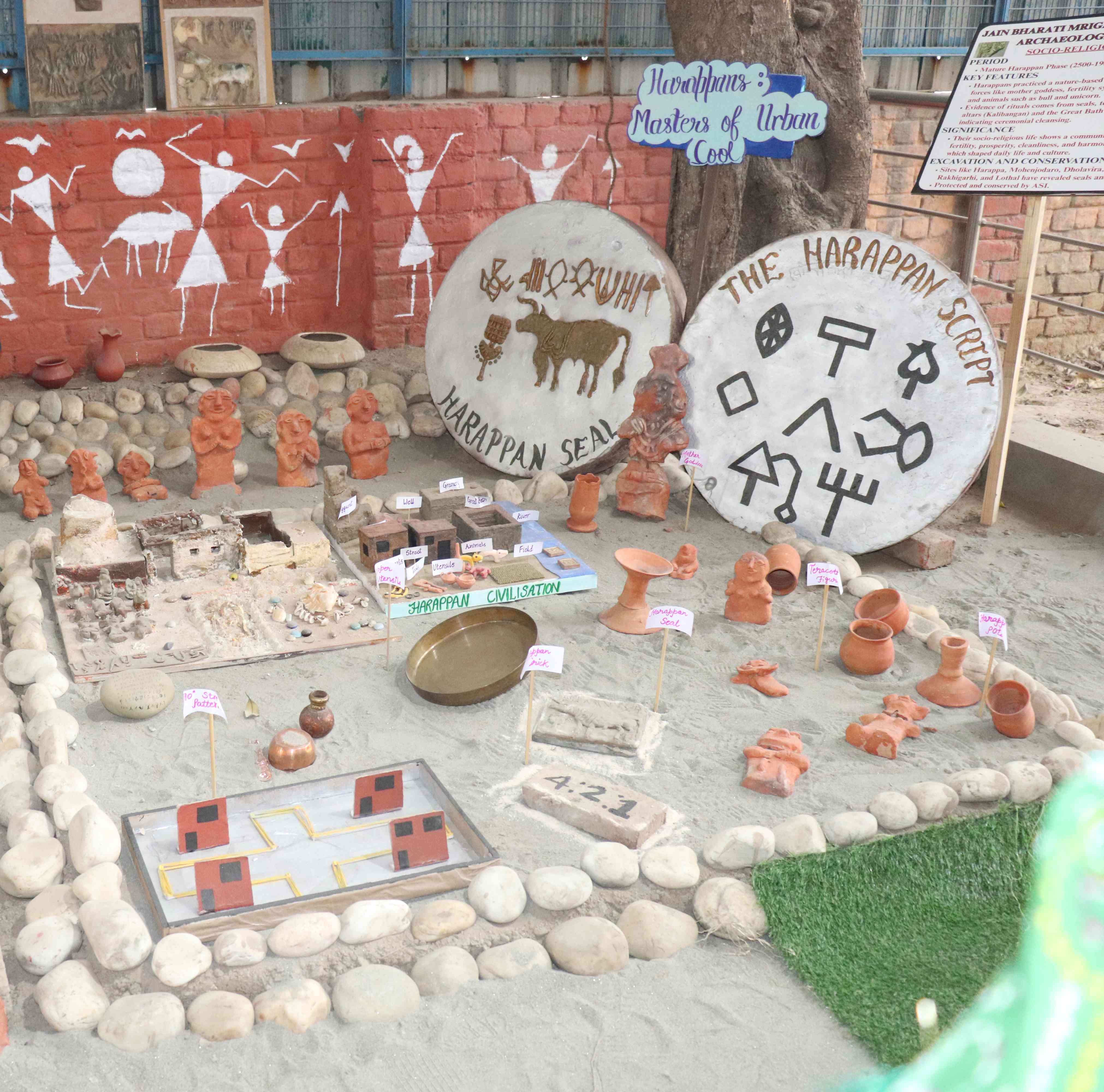
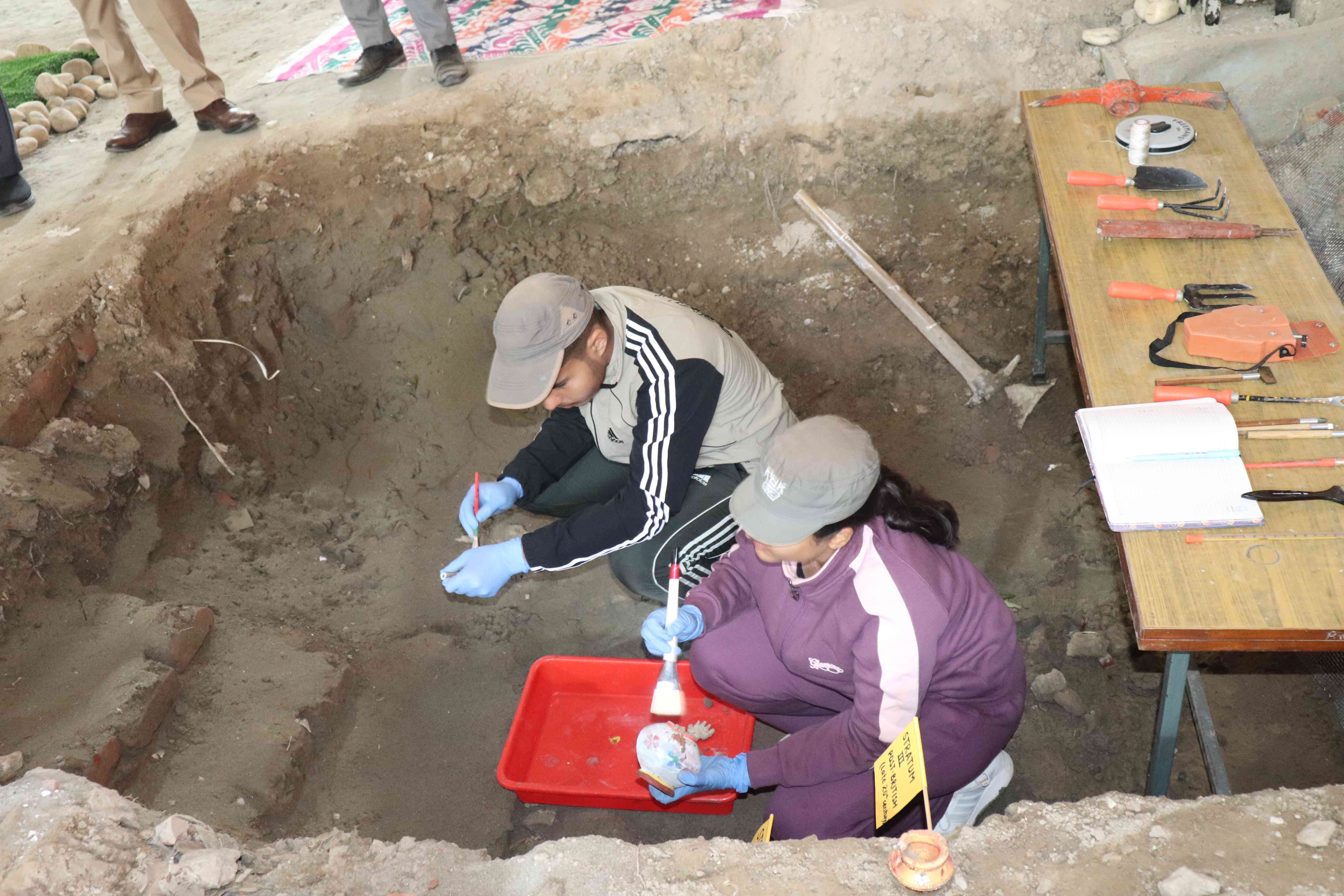
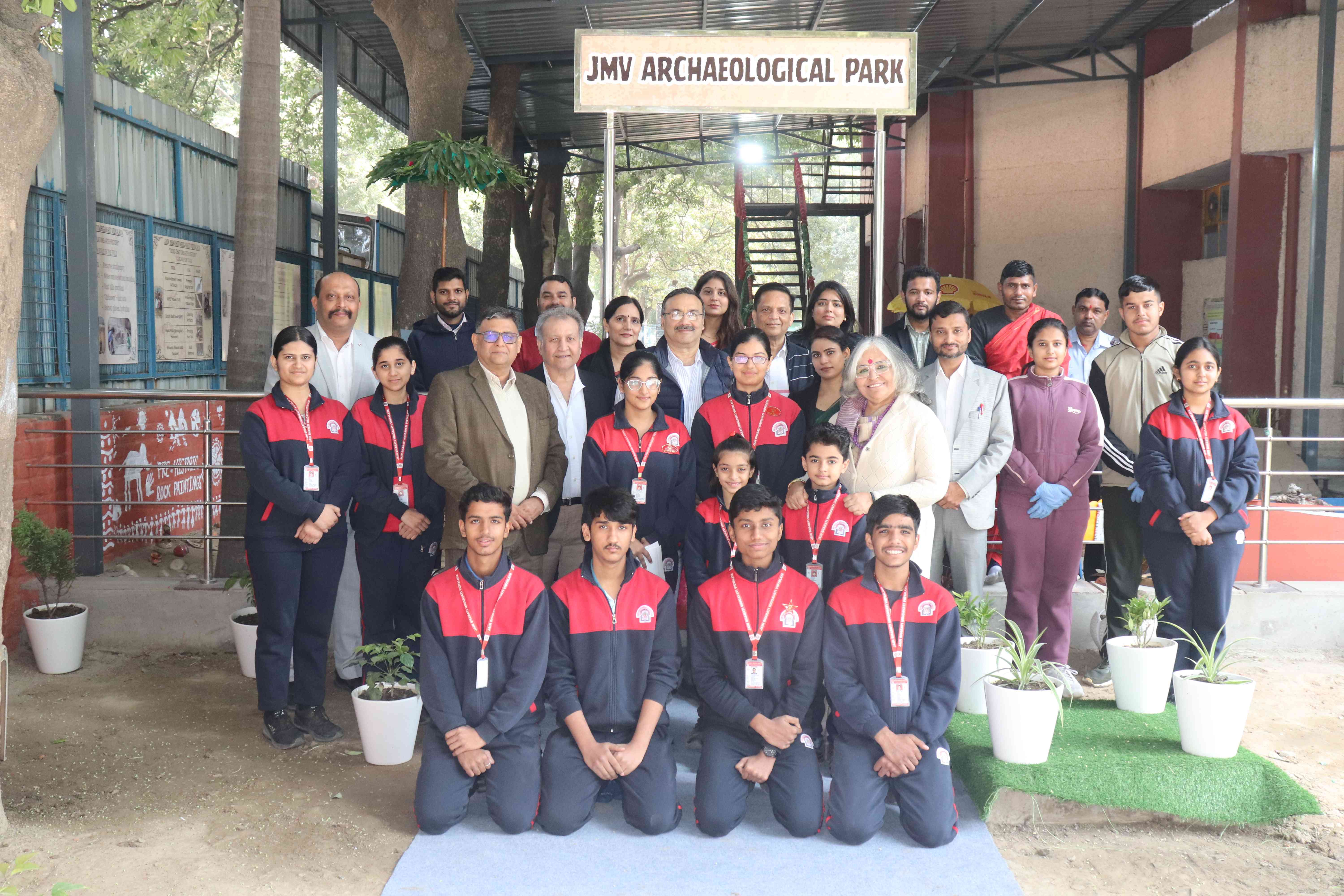
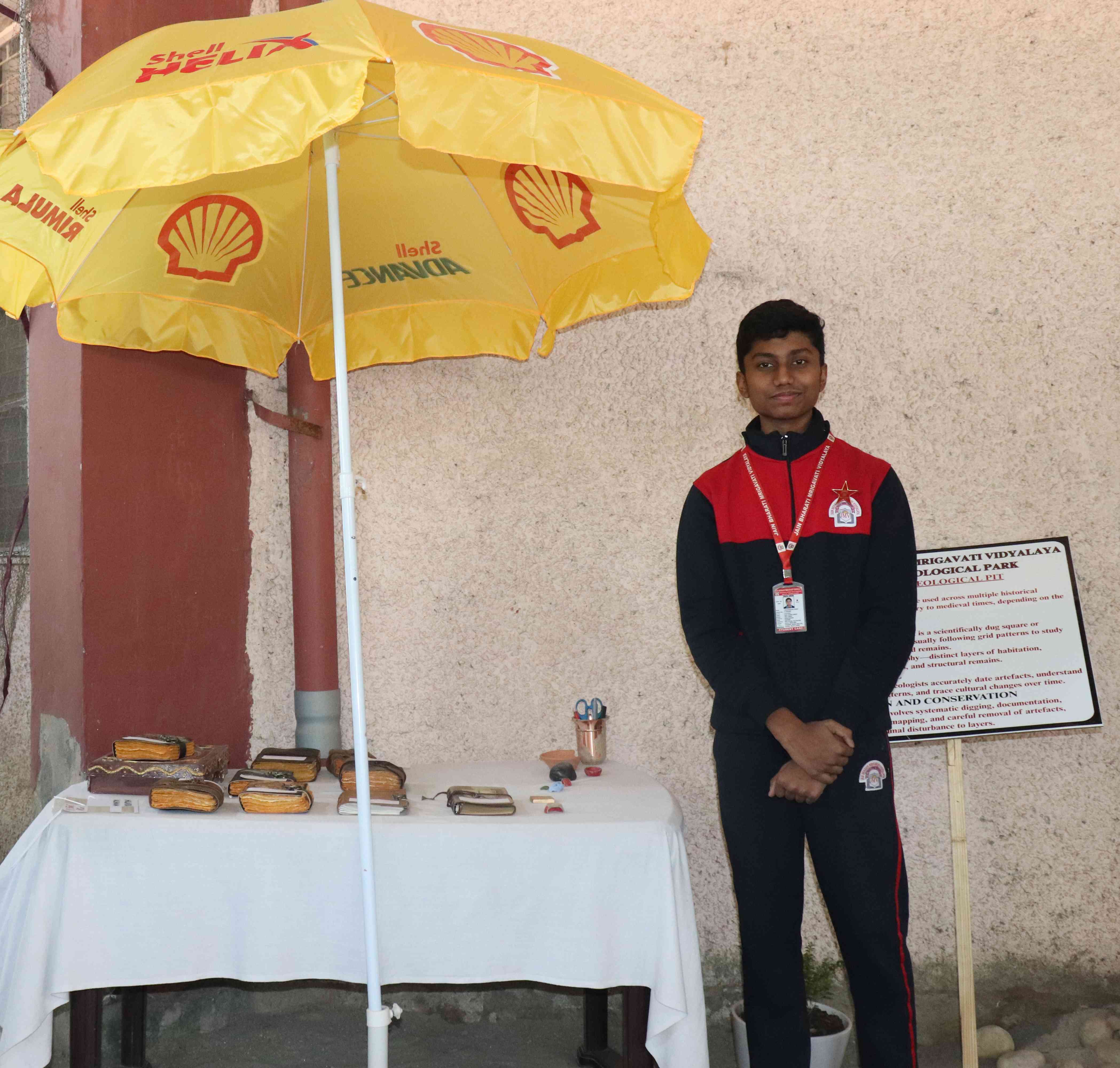
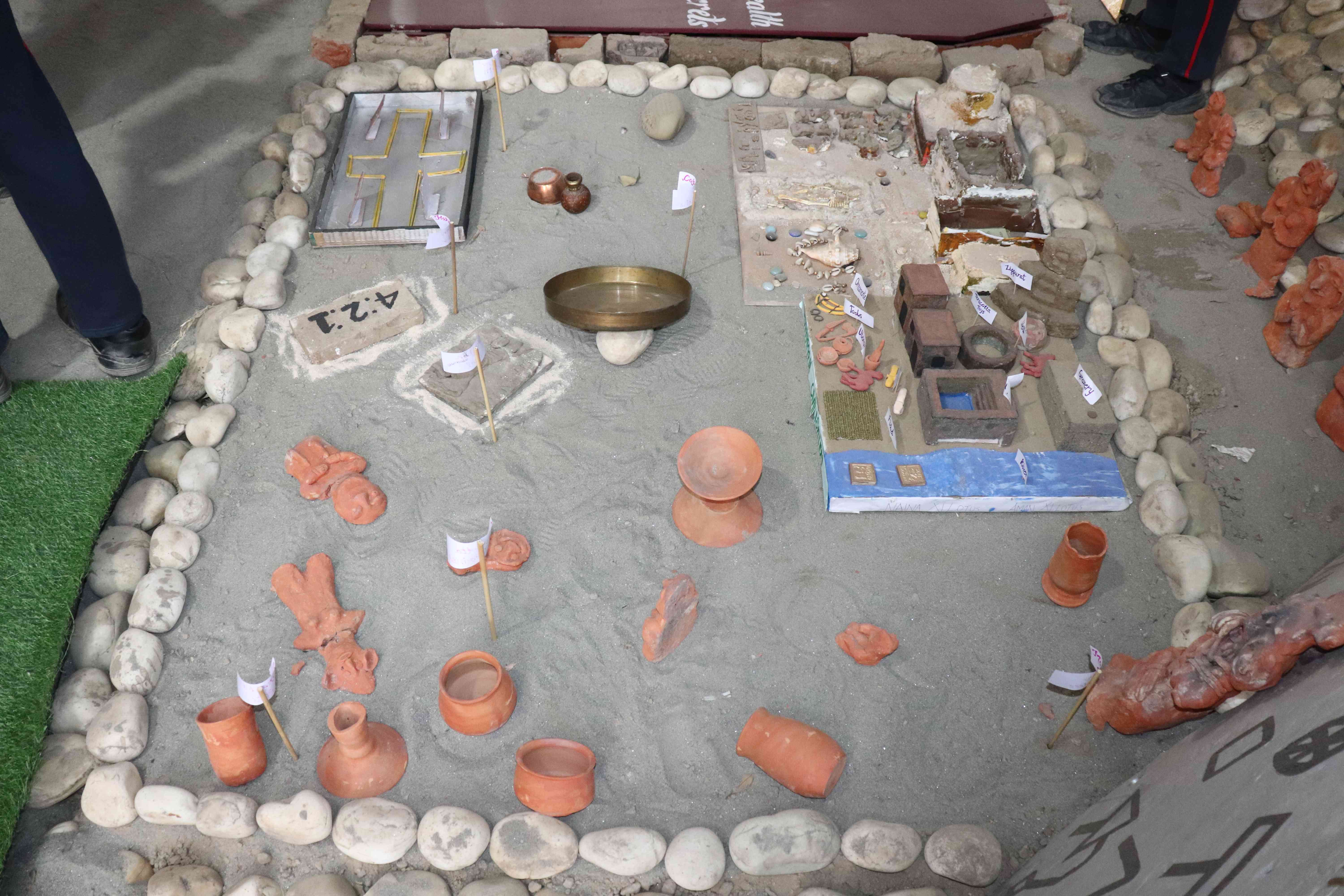
JMV’s Archaeological Park offers students hands-on experience with real-life scientific methods and excavation techniques, in line with the vision of NEP 2020. It enables learners to move beyond textbooks and actively engage in surveying, excavation, documentation, and analysis, fostering critical thinking and scientific inquiry.By integrating history, geography, archaeological science, and technology, the park promotes experiential, multidisciplinary learning while deepening students’ connection with India’s rich cultural heritage. It transforms learning into a journey of exploration, nurturing curiosity, creativity, and real-world problem-solving skills.

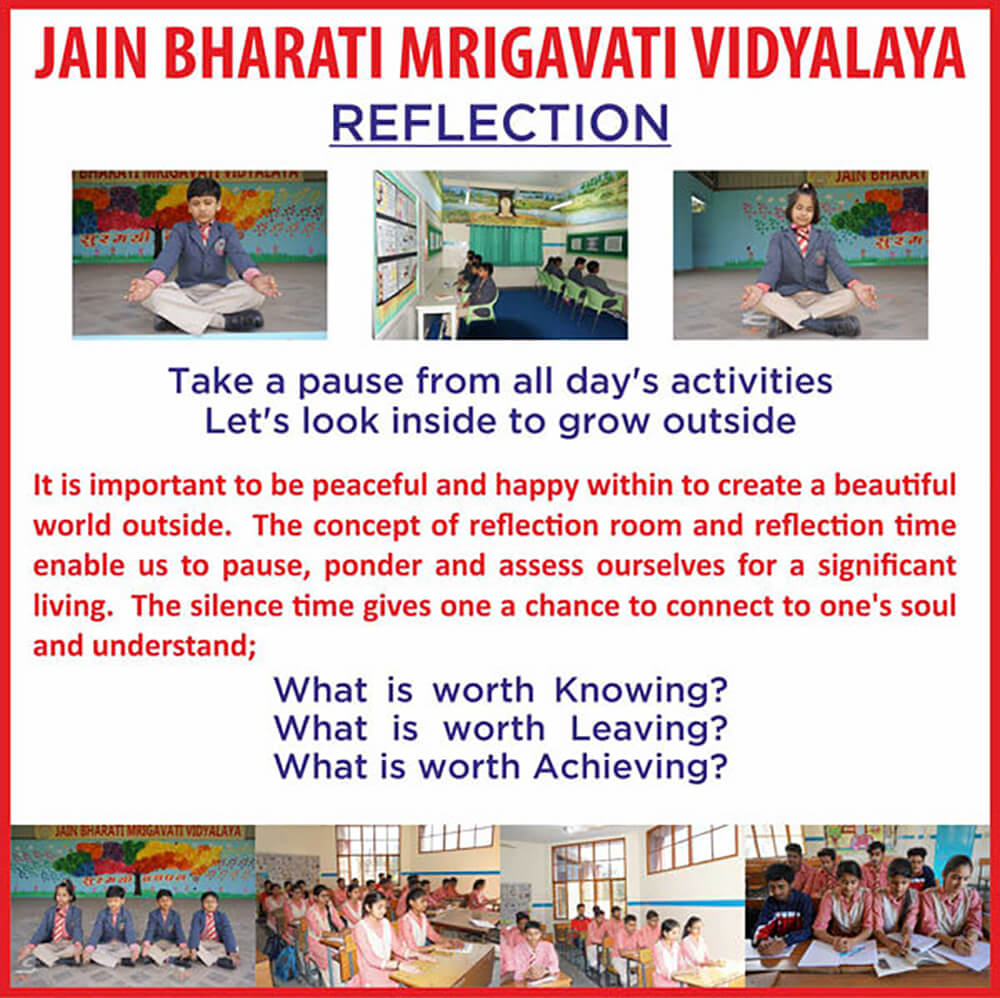
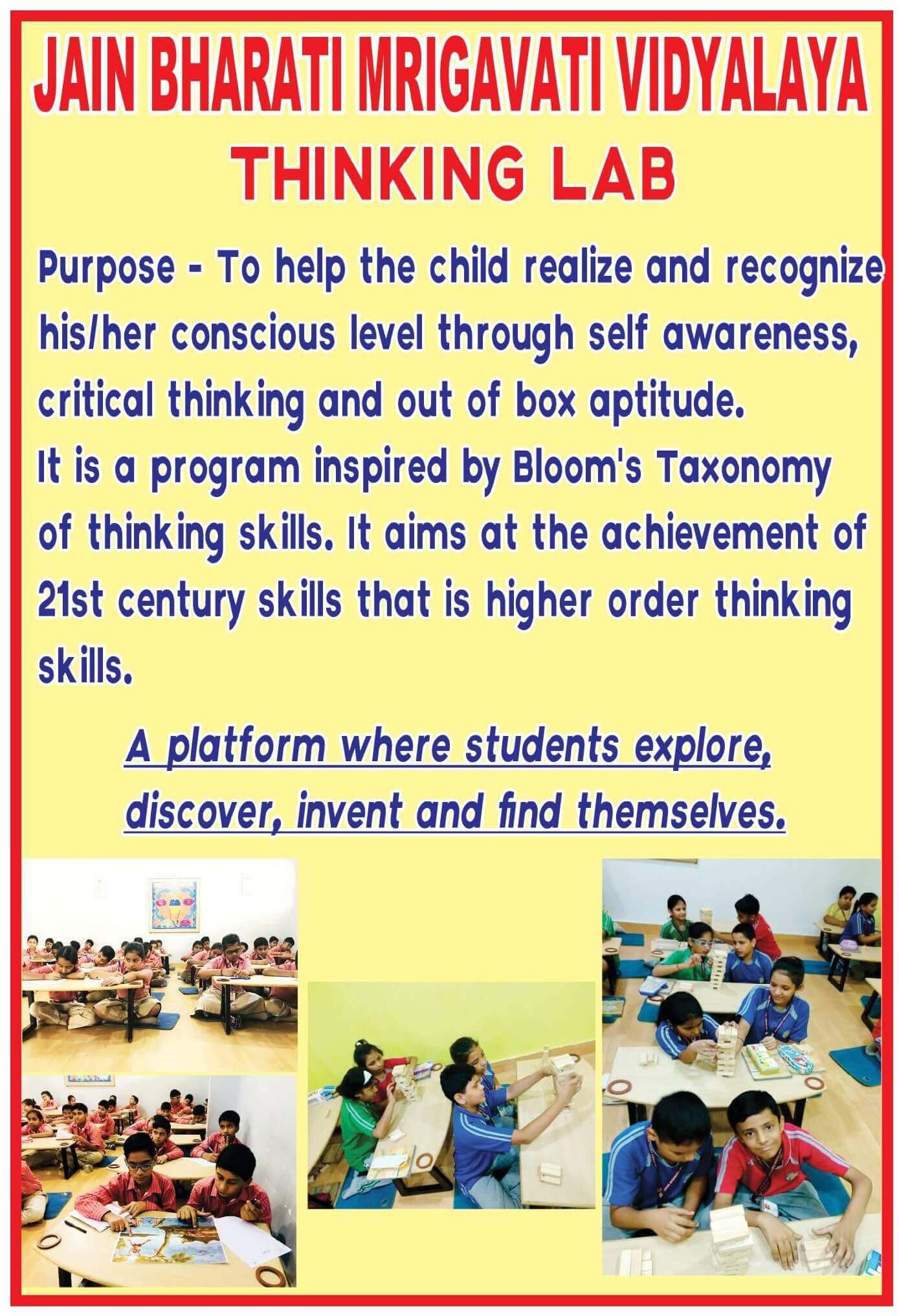
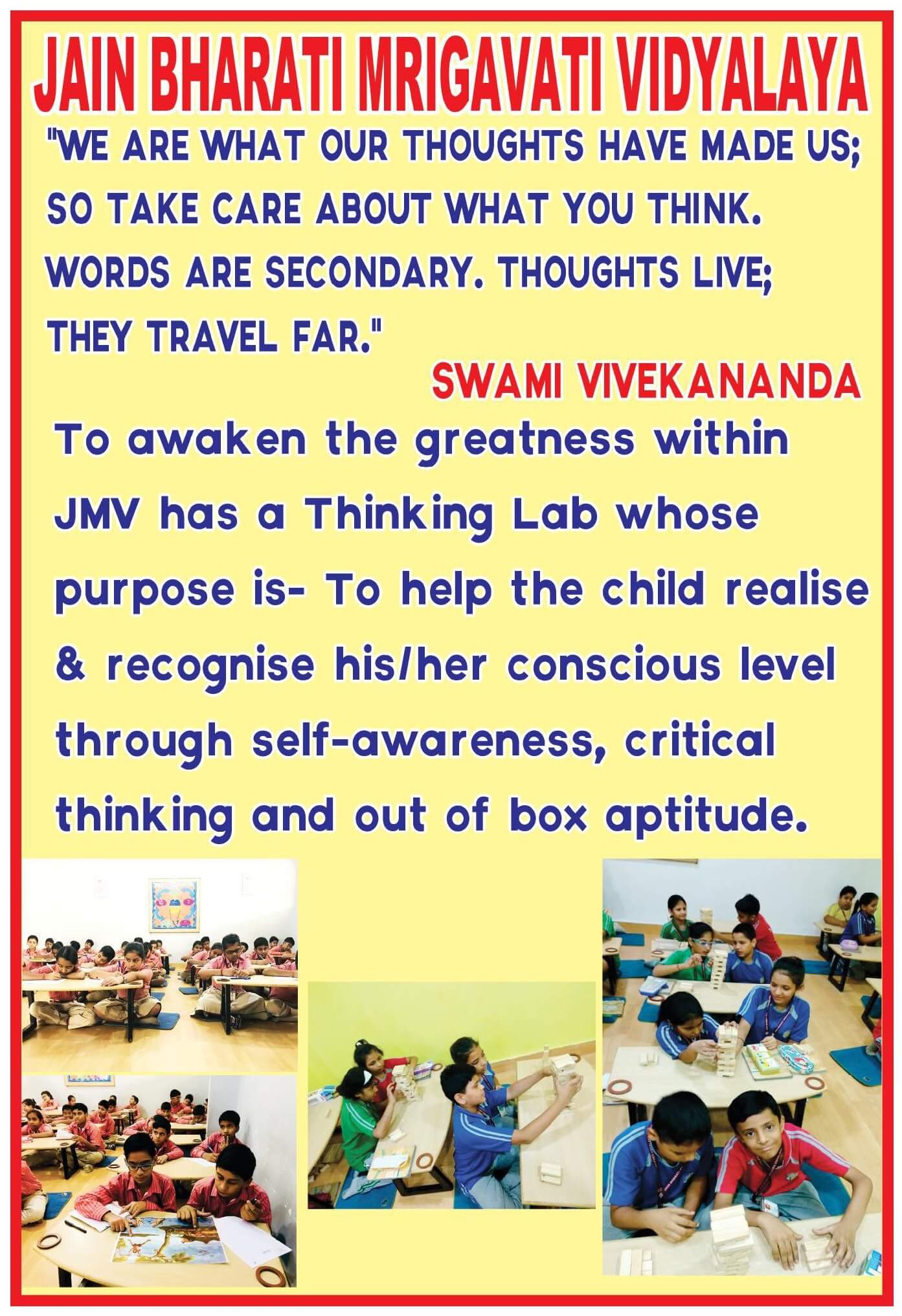
PURPOSE:- The purpose is to help the child realise & recognise his/her conscious level through self awareness, critical thinking and out of box aptitude.
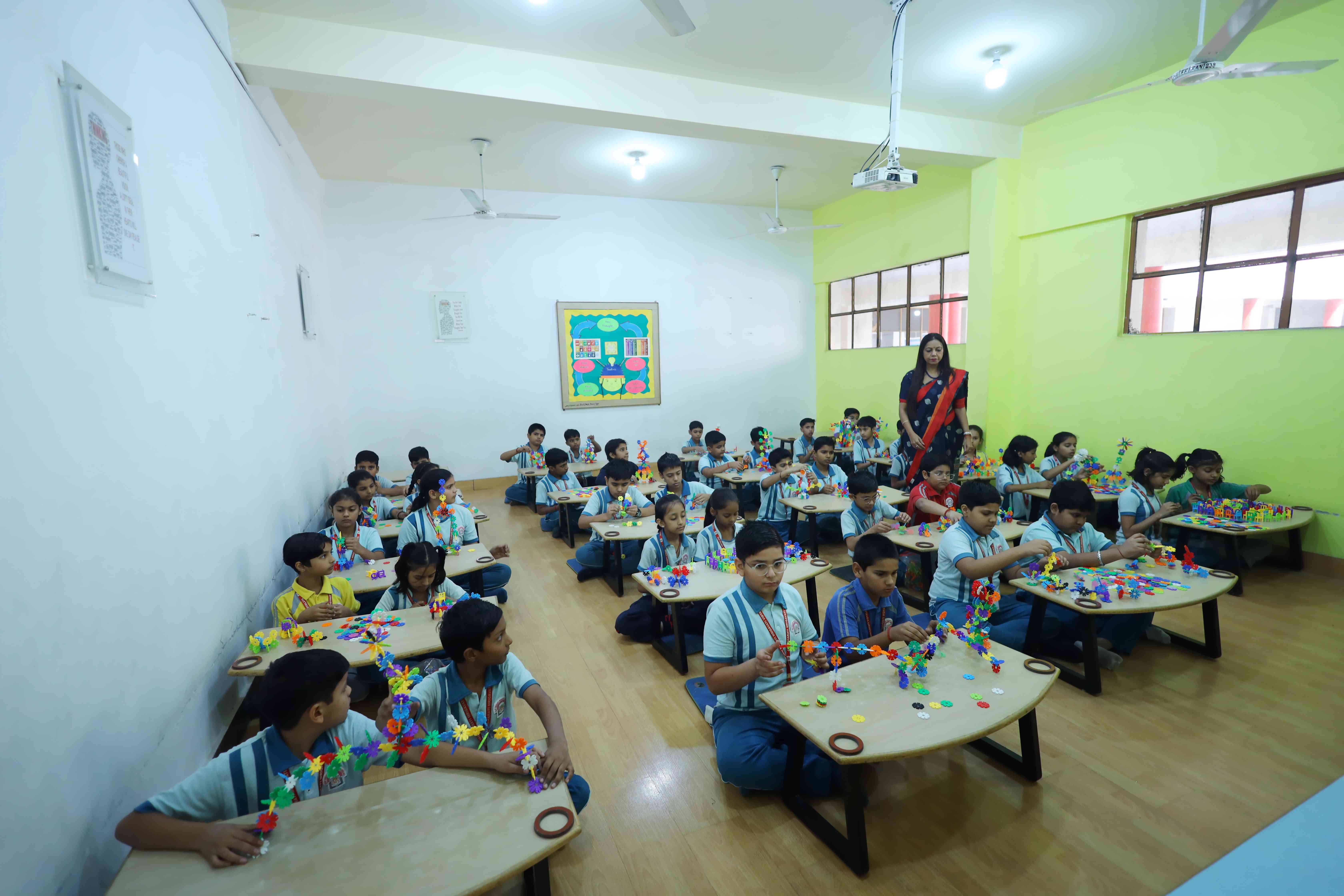
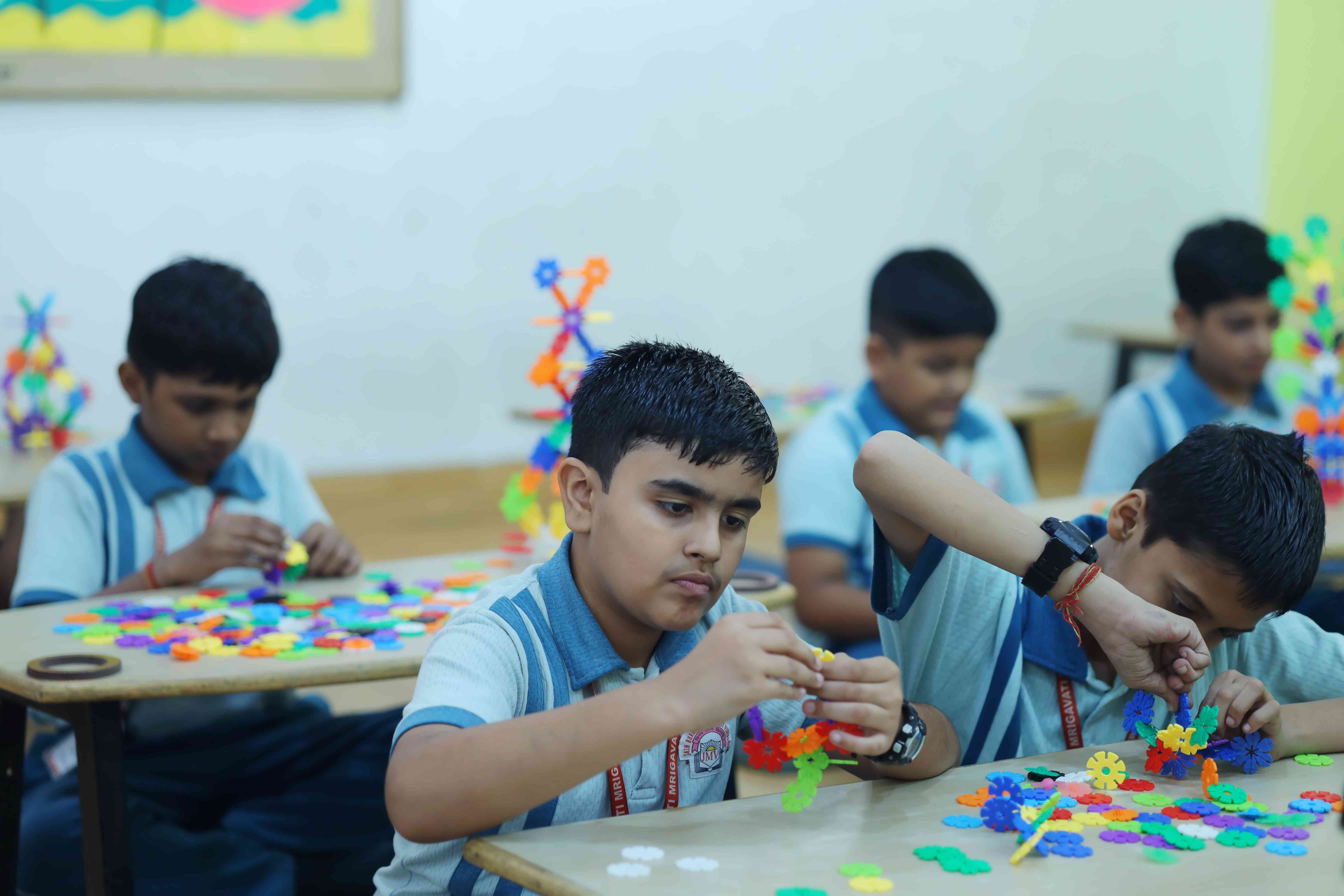
The changing scenario in global education system and the dearth of creative thinkers have accentuated a paradigm shift from rote learning to creative thinking. With this thought in mind we have set up a Thinking Lab in our vidyalaya. It is inspired by Bloom’s Taxonomy of Thinking skills and provides a platform to the students to go beyond their books and explore their own thinking.
The objective is to foster curiosity, creativity along with critical and positive thinking. It will help them to build skills that last longer in one’s life.
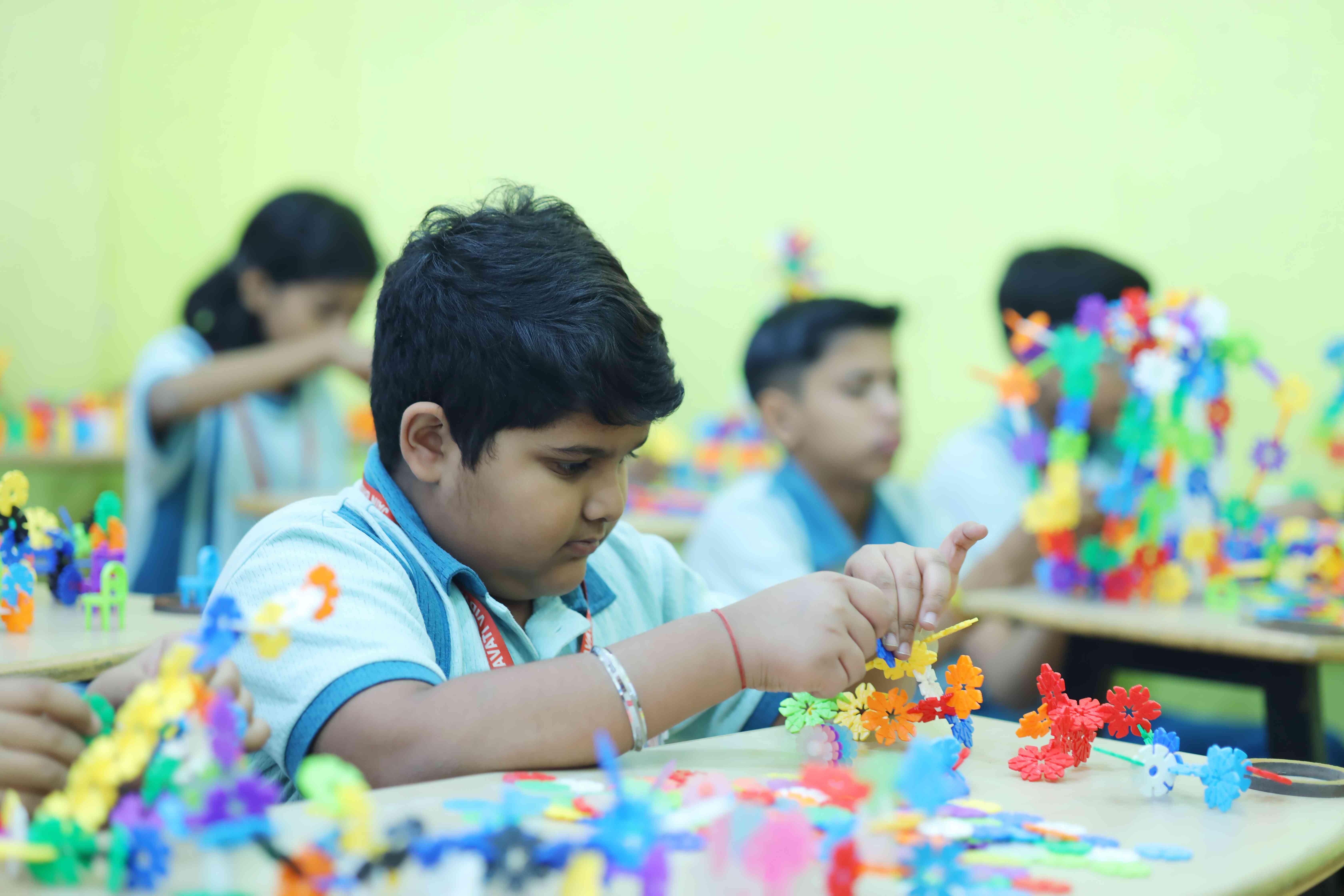
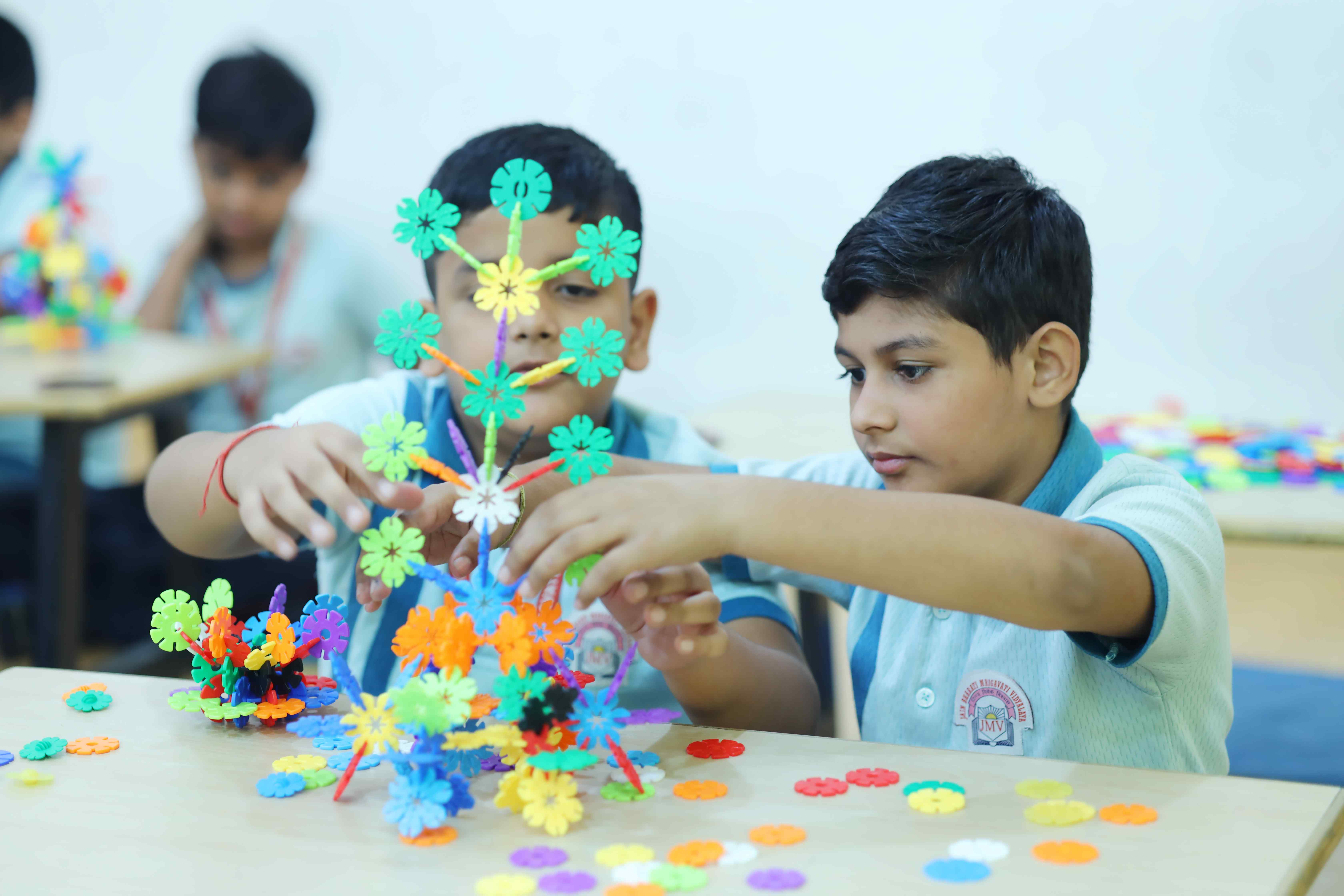
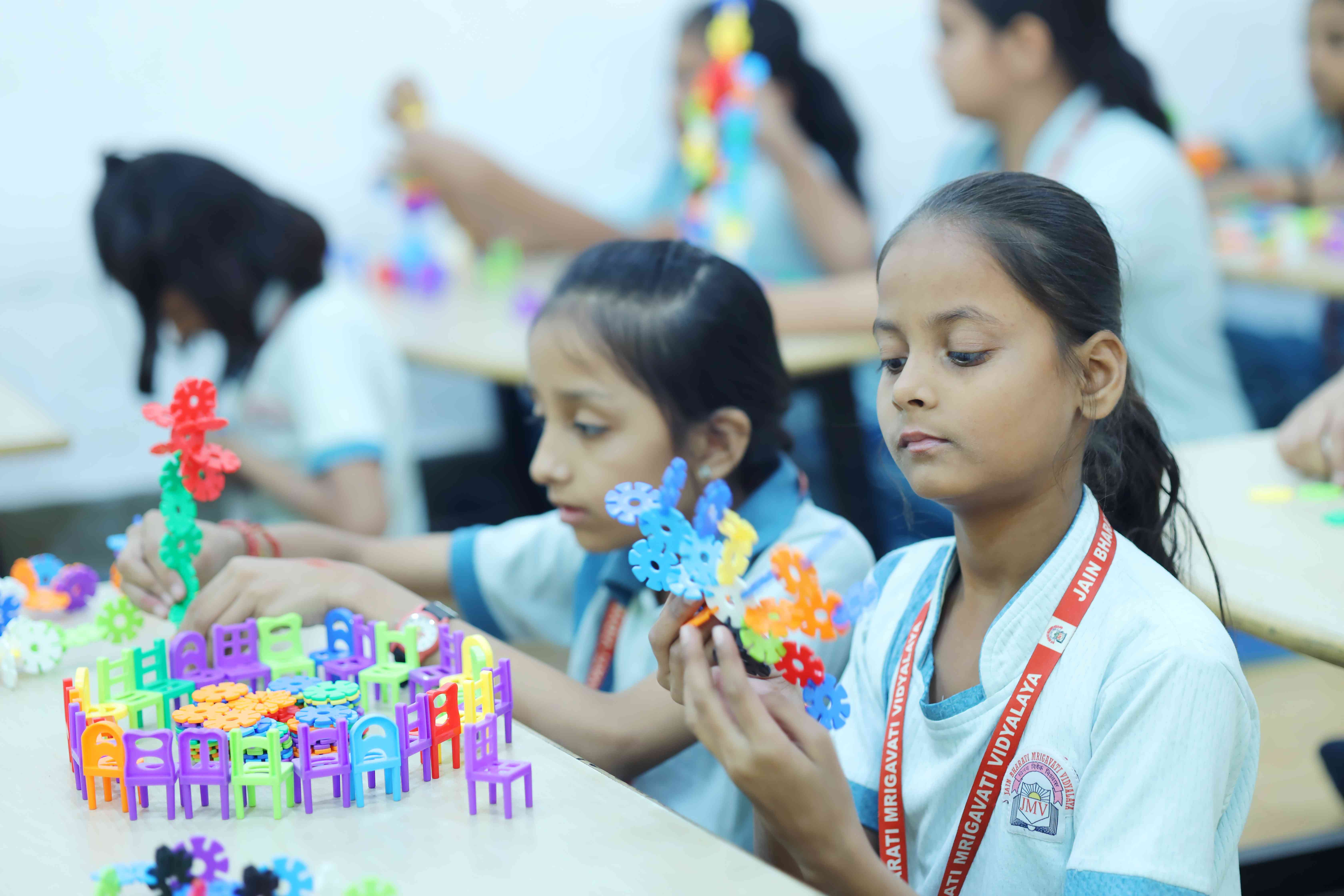
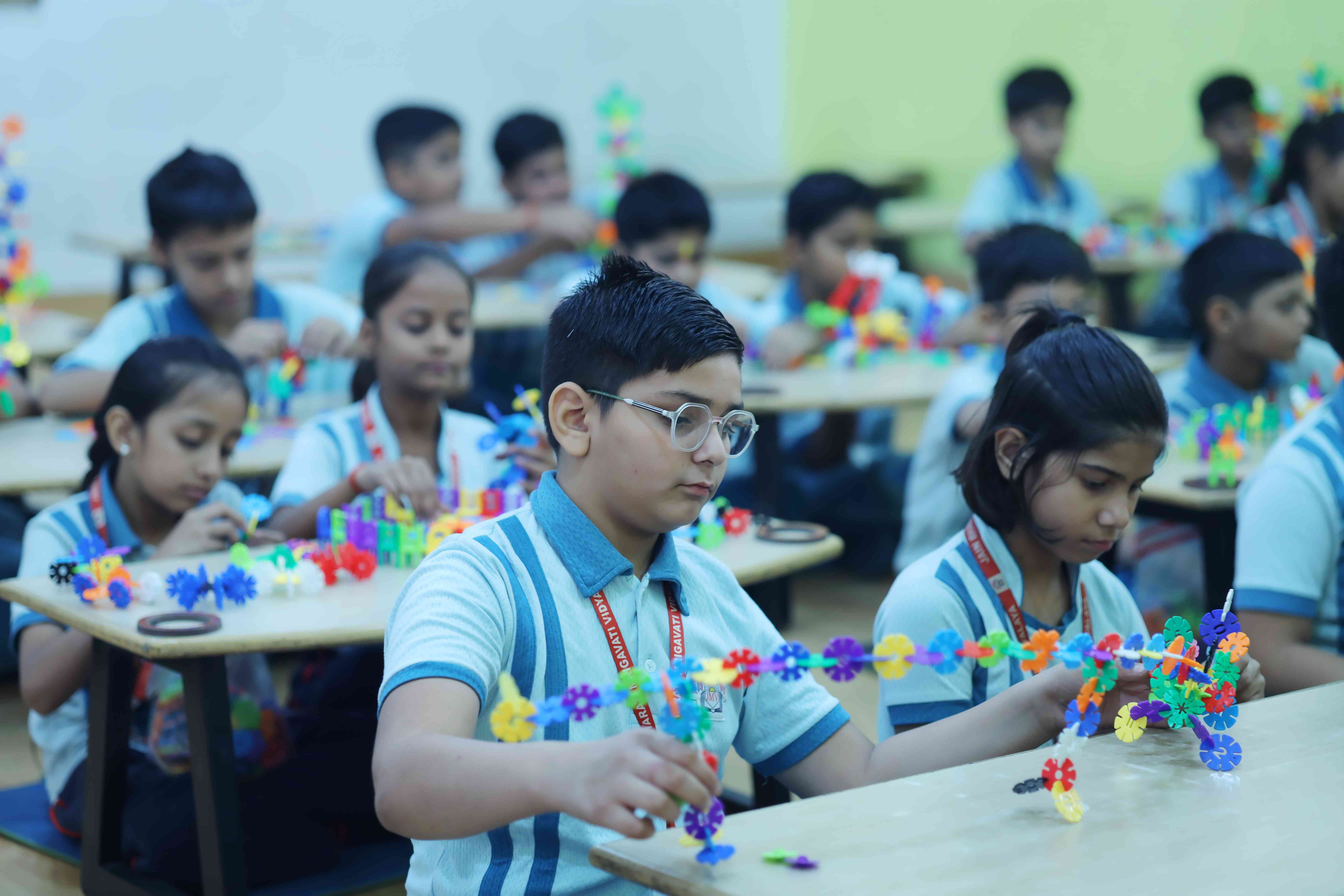
Here the students are given an exposure to experiential learning and they learn through certain thinking tools and mind games in a fun-filled way. The educational tools are designed specifically to encourage cognitive thinking skills like basic logic, reasoning and creative concepts.
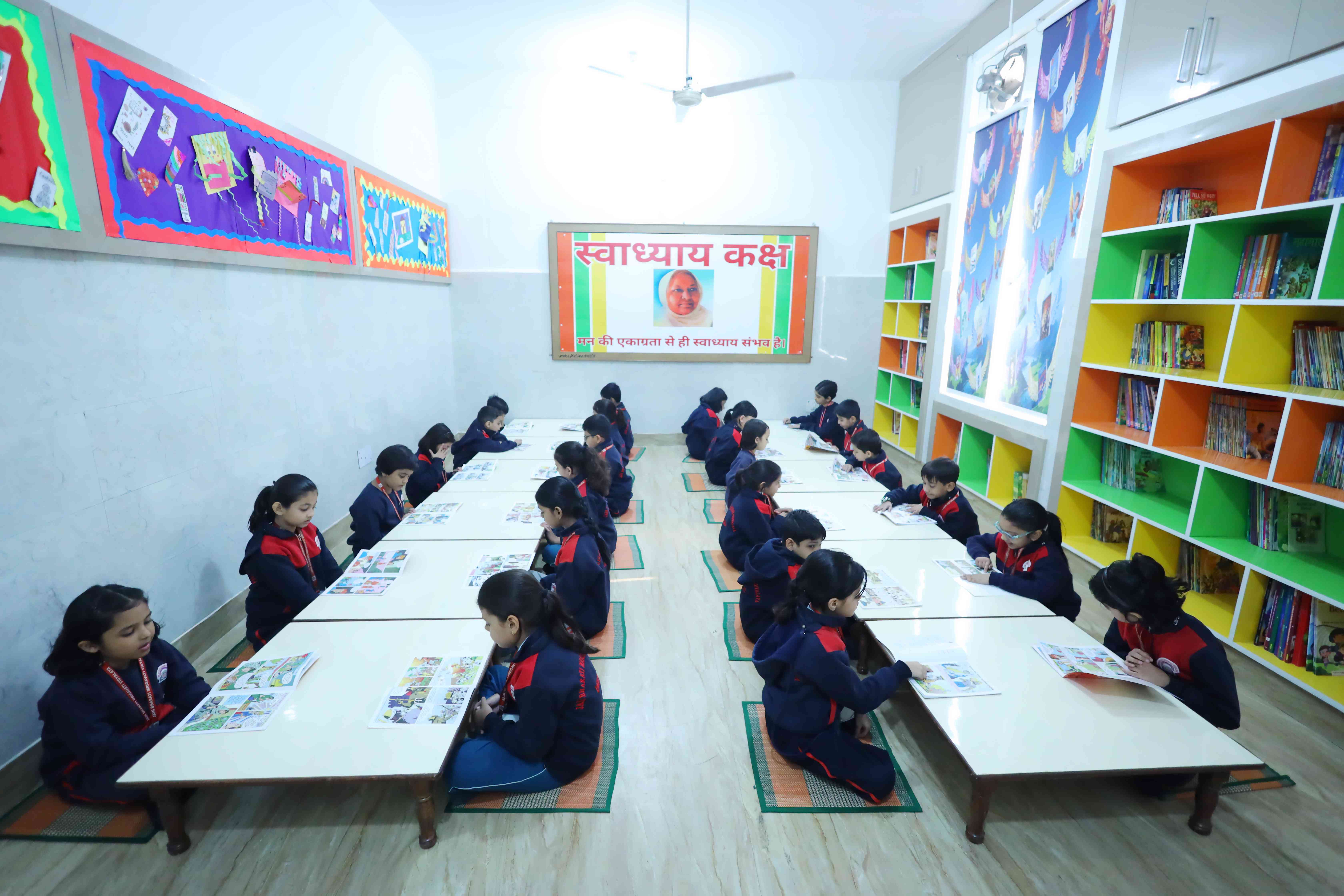
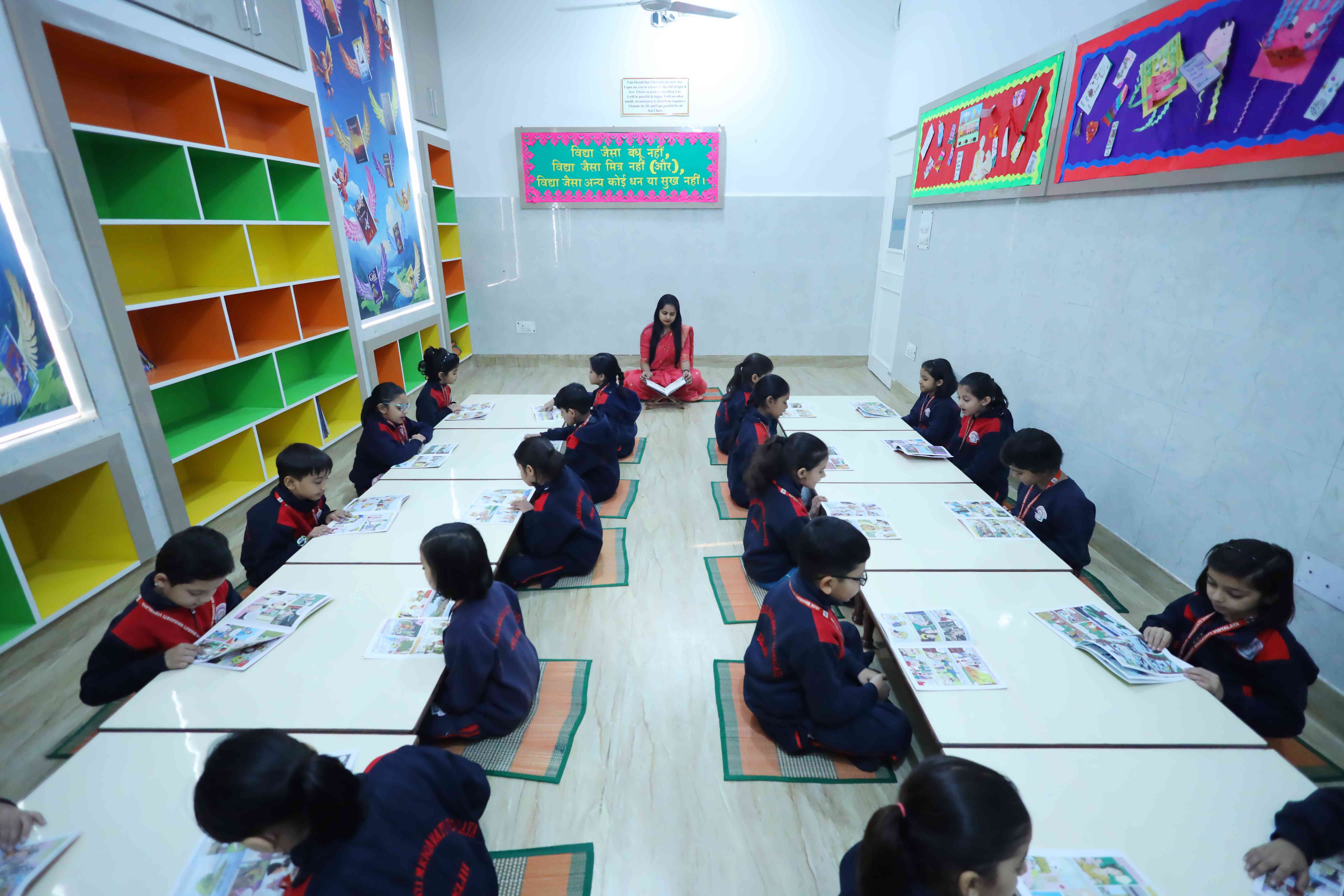
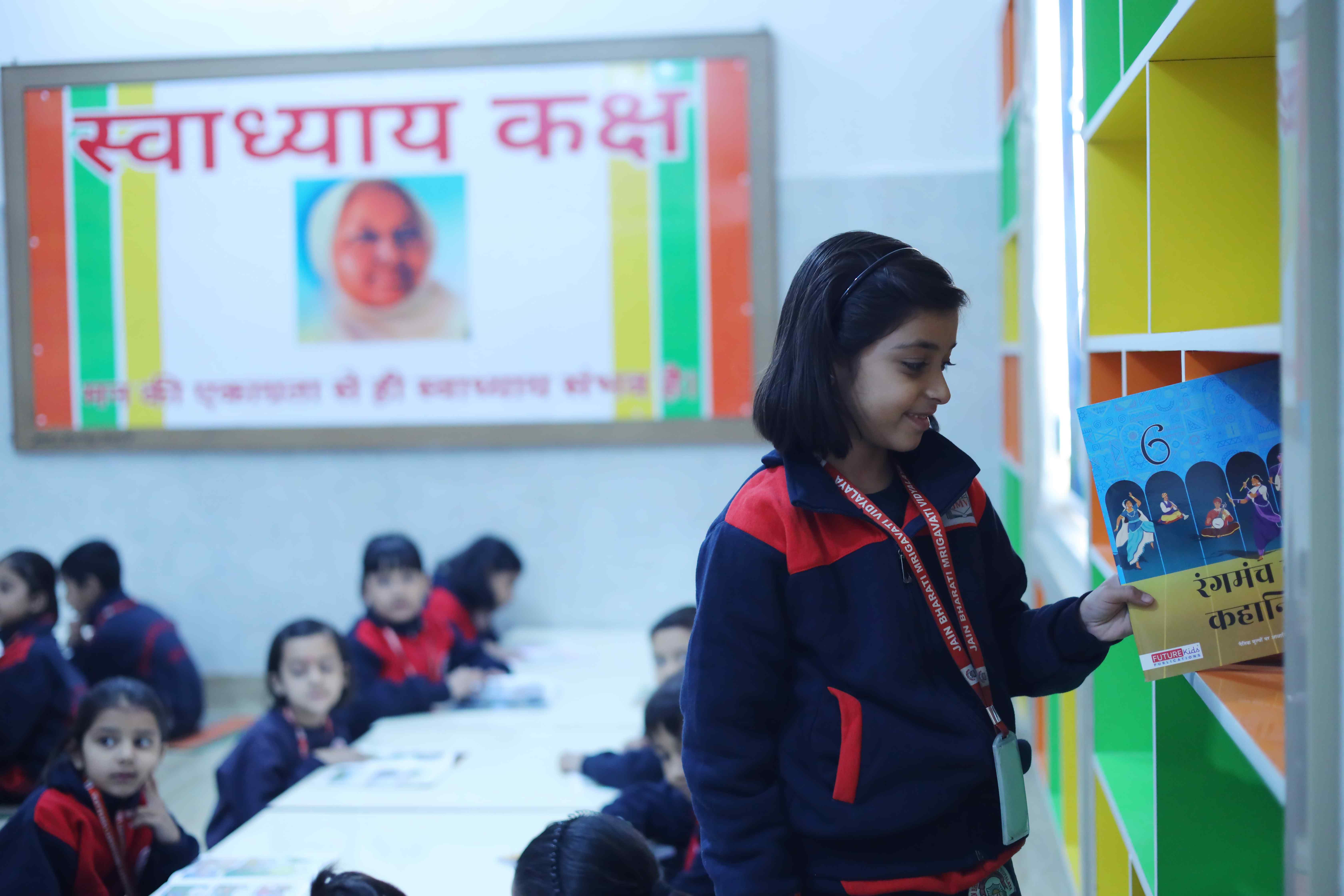
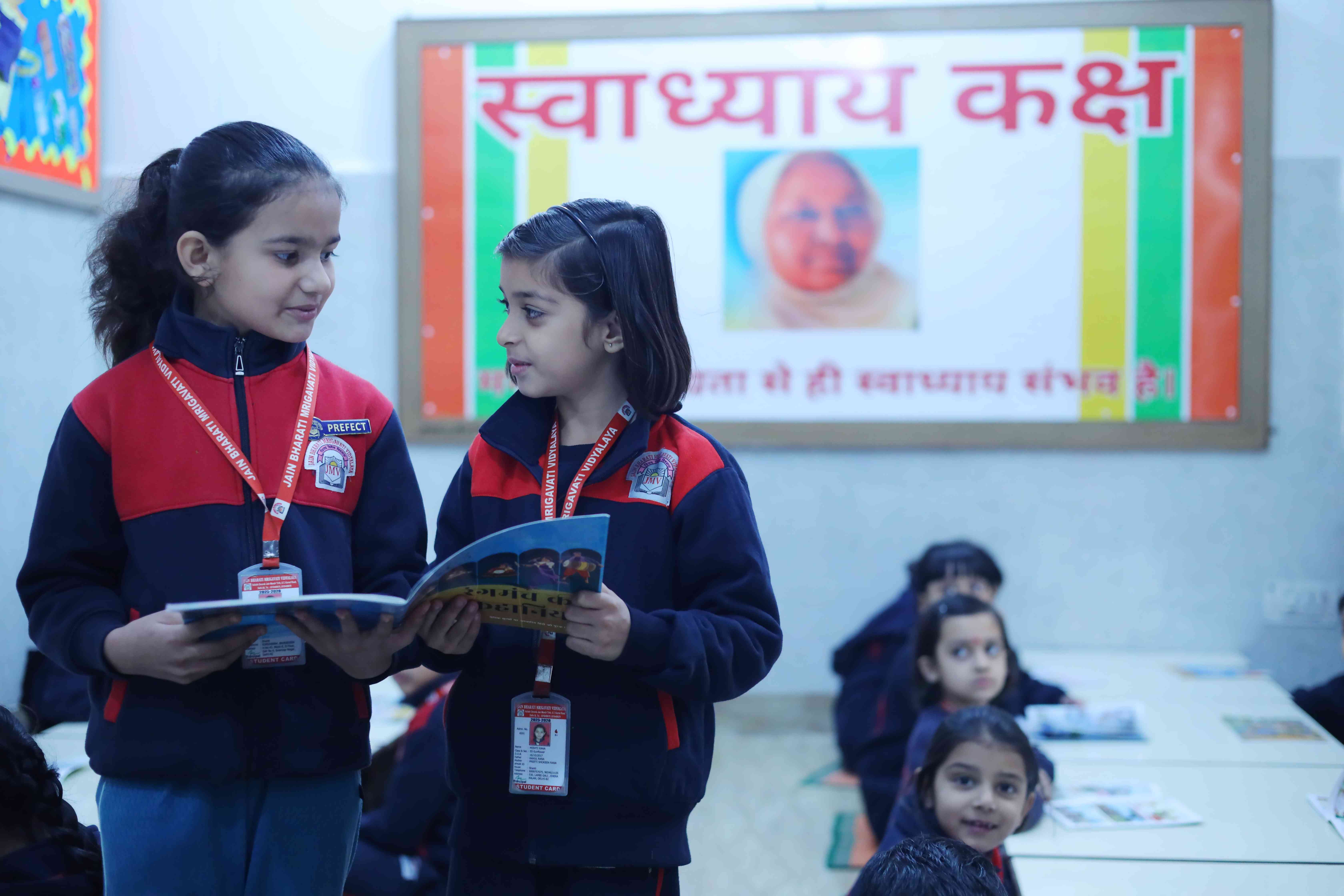
Swadhyaya Kaksh is a serene, value-based learning space designed
to nurture self-study, reflection, and independent learning.
Inspired by the philosophy of Swādhyāya propounded by Sadhvi
Mrigavati Shree Ji Maharaj, it emphasizes inner awakening,
mindfulness, and learning through one’s own effort.
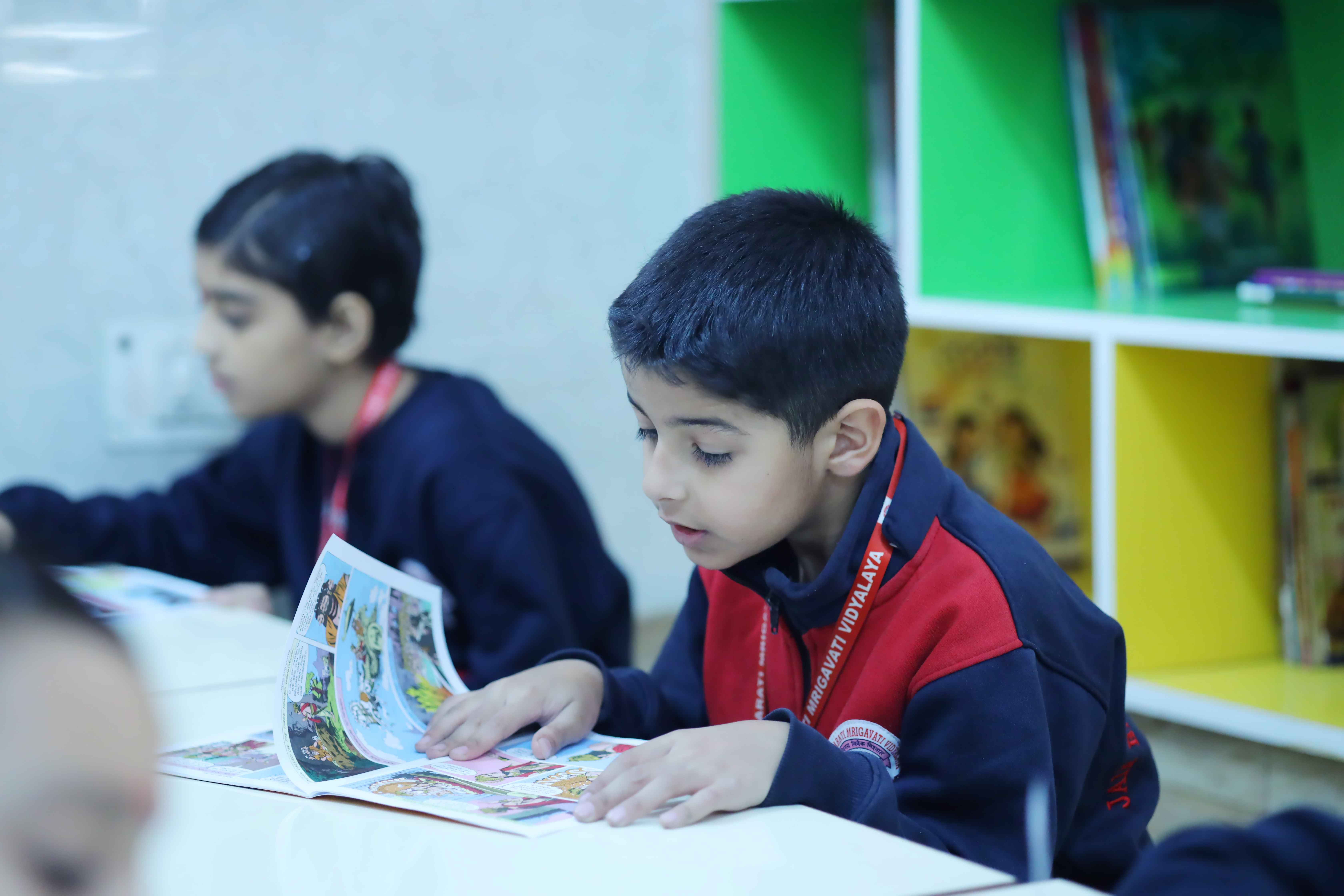
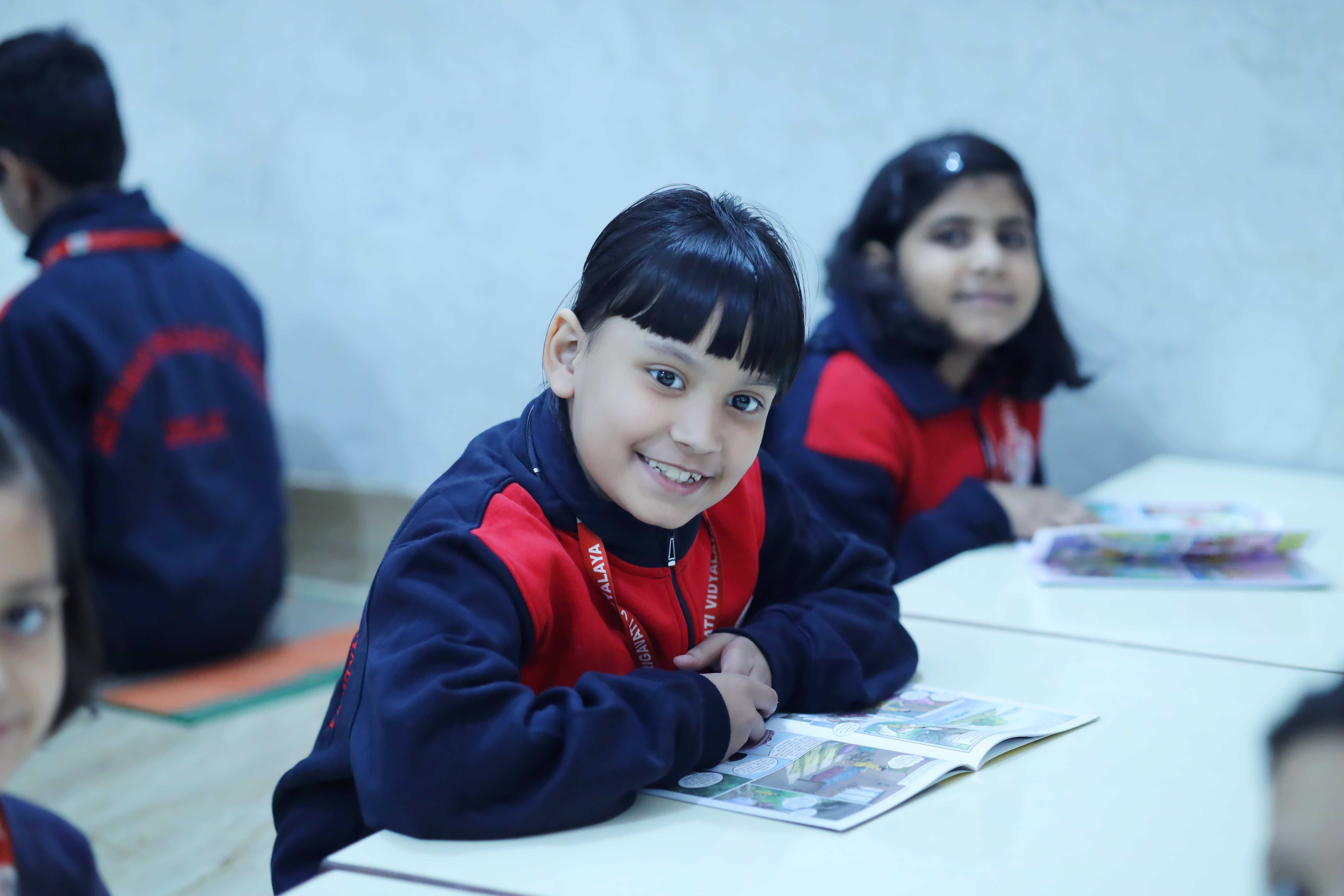
Objective is to cultivate the practice of Swādhyāya; foster
joyful, self-directed learning; build strong reading habits;
enhance focus, mindfulness, and inner discipline; promote
value-based education; and support the holistic development of
students.